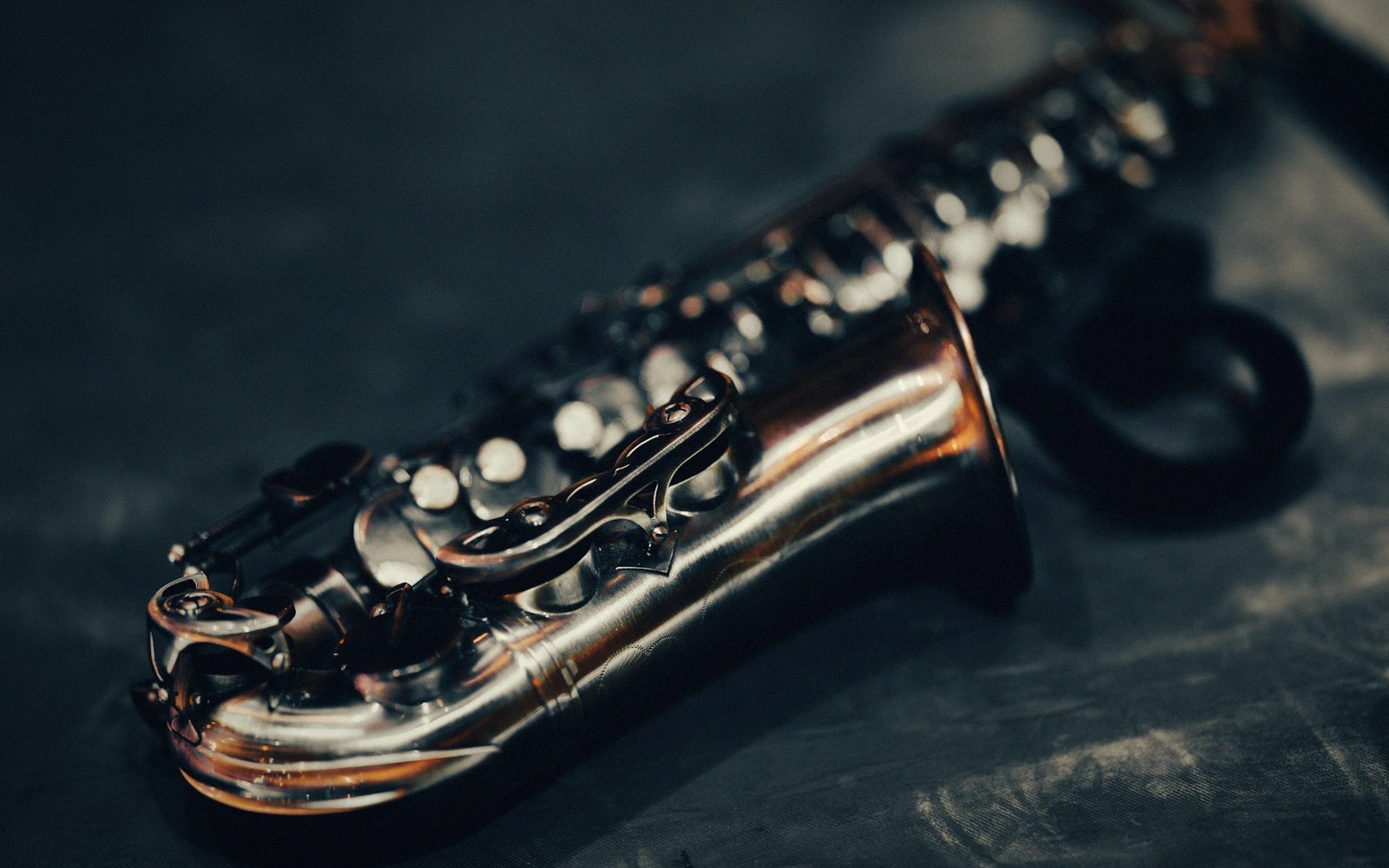
Adolphe Sax patented his invention in Paris in 1846 with a specific idea in mind: a wind instrument that could project like brass but inflect like a woodwind. What he couldn't have anticipated was how precisely it would shadow the range, the weight, and the emotional grain of a human singing.
01The Physics of the Resemblance
The saxophone is, at its core, a conical metal tube driven by a single reed — a strip of cane that vibrates against a mouthpiece. That combination is unusual. Brass instruments use the player's lips as the vibrating source; clarinets use a cylindrical bore that suppresses even harmonics. The saxophone's conical bore restores those harmonics, producing an overtone series close to an open-ended tube — which is also, roughly, what happens inside a human throat when someone sings. The result is a fundamental tone that sits just adjacent to the voice, warm where brass is bright, flexible where flute is glassy.
Then there is the embouchure — the grip of the lips, jaw, and oral cavity around the mouthpiece. A saxophonist can shade a note by relaxing the jaw, tightening the throat, or shaping the tongue. These are not mechanical adjustments; they are the same muscular choices a singer makes to push a syllable toward anguish or ease. The instrument rewards exactly the kind of bodily intelligence that singing does.
02What the Players Made of It
The early masters understood this instinctively. Coleman Hawkins, working in the 1920s and 1930s, gave the tenor saxophone a broad, chest-heavy authority — he made it sound like a baritone working through a ballad. Lester Young brought something softer and more indirect, a sound sometimes described as floating, lighter in the chest but loaded with implication.
You hear it and you know: somebody is speaking.
Charlie Parker collapsed the distance further: his alto lines could dart and turn at the speed of thought, and the tone itself — never pretty in a conventional sense — had the urgency of someone with something to say right now. Post-Parker, the vocabulary of the horn opened in every direction. John Coltrane found a keening, almost human cry in the upper registers of the tenor and soprano. Paul Desmond, the cool counterargument, made the alto sound like a thoughtful aside between friends.
None of these sounds are the same. That range is precisely the point. The saxophone is the instrument that made jazz's most personal register possible — a way to put an individual voice, unmistakable and unrepeatable, inside a room full of strangers. You hear it and you know: somebody is speaking. The fact that it isn't words makes it no less clear.