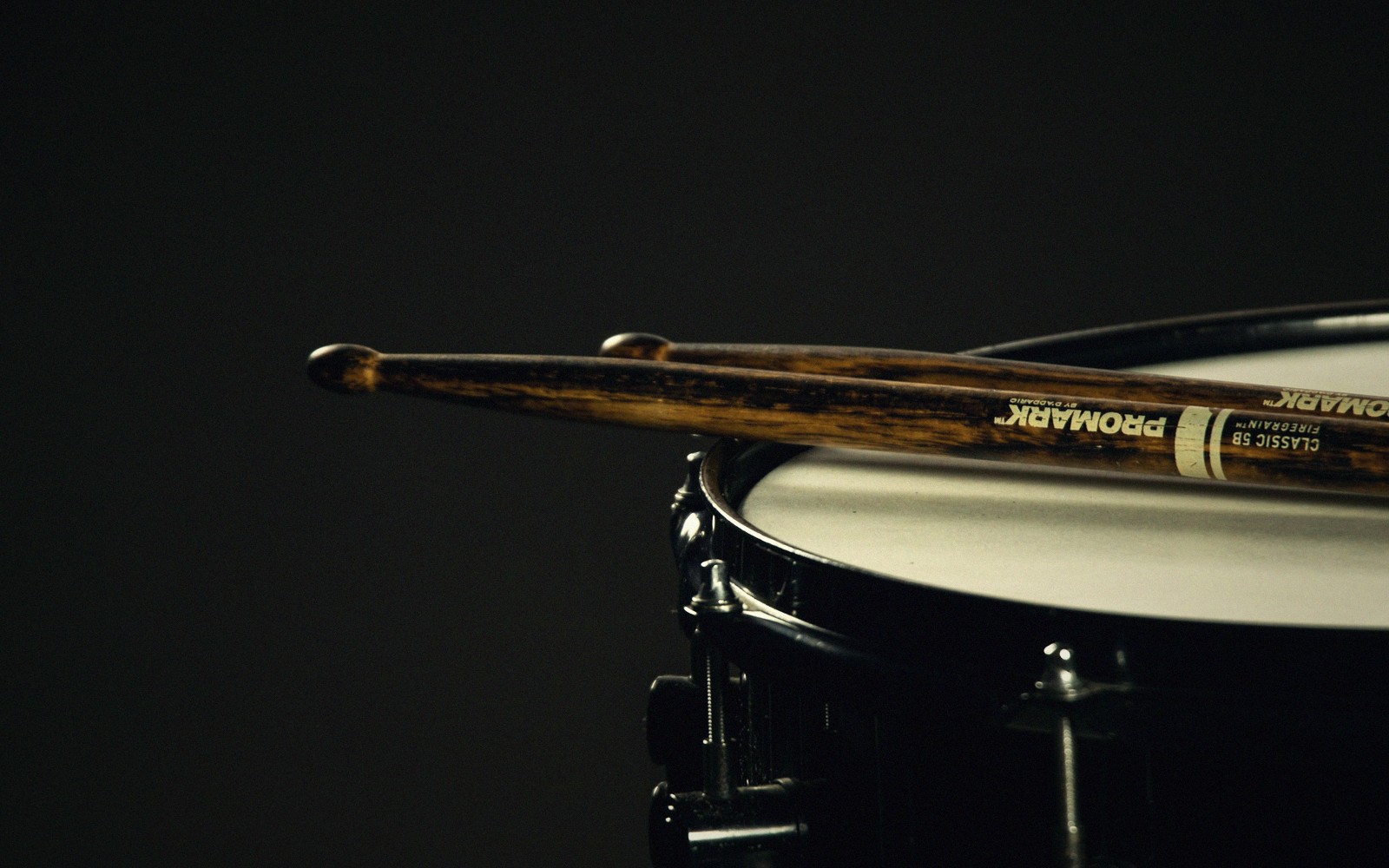
A drummer's brushes look almost too modest to matter: two thin handles, each spreading into a fan of wire bristles. Swap them in for sticks and the volume drops dramatically — but so does the margin for error. Every slur, every pulse, every shift in pressure becomes audible. There is nowhere to hide.
The mechanics are simpler than they sound. One hand sweeps the snare head in wide, continuous circles or figure-eights, producing the dry, sustained shhhh that functions as the cymbal's quieter cousin. The other hand taps or presses the same head to mark the beat — sometimes lifting the bristles cleanly, sometimes dragging them for a slightly choked accent. The interplay between those two gestures is where a drummer's personality lives. On sticks, the attack and the decay are largely fixed by physics; on brushes, the player sculpts both, adjusting weight and angle and speed in real time like a calligrapher who changes their mind mid-stroke.
Like a calligrapher who changes their mind mid-stroke.
The material matters. Early wire brushes from the 1920s had rigid splays; by the postwar decades, retractable handles allowed drummers to vary the fan's spread, tightening it for a crisper tap, opening it for that broad, gauzy wash. Some players prefer nylon bristles for a slightly brighter texture; others stay with steel for its warmer, almost papery friction. The snare head matters just as much — a coated batter head offers the fine grain that wire wants to cling to. On a clear head, brushes skate; on coated Mylar, they sing.
In a trio or a piano-bass-drums ballad setting, the brush player is as much a colourist as a timekeeper. The classic slow-tempo sweep keeps the quarter note alive without ever hammering it — the listener feels the pulse more than they hear individual beats. When the tempo rises, a drummer might split duties differently: sweep patterns migrate to the ride cymbal, while the snare hand handles fills and accents with the tip of the bristles rather than the full fan. At fast bop tempos, brushes demand a specific kind of looseness in the wrist — grip too tight and the sweep turns into a scrape, all texture and no flow.
It is worth listening to brushwork the way you might listen to a ballad late in the night — with the conversation around you quieted, attention turned toward what is almost not there. The subtlety is the substance. A great sweep across a snare drum head does what all good rhythm does: it makes time feel inevitable, elastic, and alive — all at once, without announcing itself.