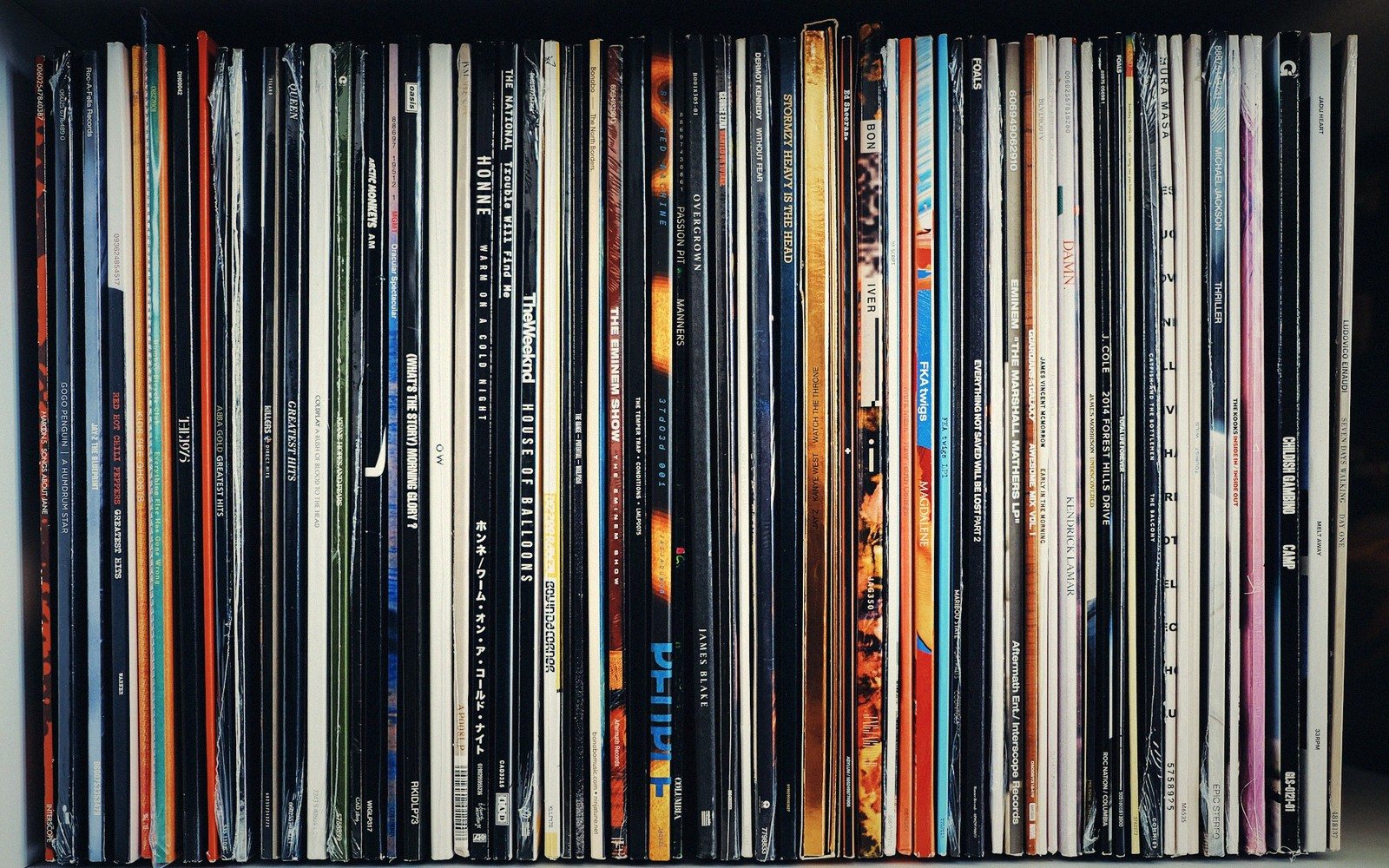
Nobody walks into jazz through the front door. They walk in through a crack in the wall — a film soundtrack, a late-night radio hour, a record a parent left on a shelf. Whatever crack you found, that's the right one. The ten records below aren't "the ten best jazz albums" — lists like that are for people who already have fifty. These are doors. Each one opens onto a slightly different room, and you don't have to visit them in order.
| ALBUM | ARTIST | YEAR | THE DOOR IT OPENS |
|---|---|---|---|
| Kind of Blue | Miles Davis | 1959 | Modal space, the easiest entry |
| Time Out | Dave Brubeck Quartet | 1959 | Odd meters that feel natural |
| A Love Supreme | John Coltrane | 1965 | One sustained, devotional idea |
| Moanin’ | Art Blakey & the Jazz Messengers | 1958 | Hard bop, big feeling |
| Waltz for Debby | Bill Evans Trio | 1961 | The small-trio conversation |
| Monk’s Music | Thelonious Monk | 1957 | Productive strangeness |
| Saxophone Colossus | Sonny Rollins | 1956 | Solos built like stories |
| The Black Saint and the Sinner Lady | Charles Mingus | 1963 | Large-scale ambition |
| Head Hunters | Herbie Hancock | 1973 | Jazz meets funk, no apology |
| The Shape of Jazz to Come | Ornette Coleman | 1959 | 1959 Freedom, earned last |
Miles Davis — Kind of Blue (1959). Start here not because the critics say so, but because the music makes it easy. Modal jazz strips away the busy chord changes of bebop and gives the soloists — Davis, John Coltrane, Cannonball Adderley, Bill Evans — long, open spaces to move through. Nothing lurches or surprises too aggressively. It is one of the best-selling jazz records ever pressed, and it earns that reach.
Dave Brubeck Quartet — Time Out (1959). Two 1959 landmarks in a row, for a reason: this one teaches your ear to count differently. "Take Five" is in 5/4, "Blue Rondo à la Turk" shifts between 9/8 and 4/4, and somehow none of it feels academic. Paul Desmond's alto saxophone is the warmest possible guide through odd time.
John Coltrane — A Love Supreme (1965). This might be the most complete jazz record ever made — four linked movements, one sustained idea, building from a bass-and-drum declaration to something close to ecstatic. Listen in one sitting, lights low, from the beginning. It rewards the full commitment in a way that shorter attention doesn't quite unlock.
Art Blakey and the Jazz Messengers — Moanin' (1958). Hard bop at its most physical. Bobby Timmons's title track opens with a piano figure borrowed straight from the church, and the band — including a young Lee Morgan on trumpet — plays with the kind of collective energy that makes you understand instantly why this music filled clubs. Short tracks, big feeling.
Bill Evans Trio — Waltz for Debby (1961). Recorded live at the Village Vanguard in New York, two days after the bassist Scott LaFaro died in a car accident. Evans didn't know the tapes would be released. The intimacy of it — the conversation between piano, bass, and drums, the room noise, the quiet — is the best possible argument for what a small trio can do. How a live album captures a moment and what that capture costs is all here.
Thelonious Monk — Monk's Music (1957). Once you've heard Evans's clean voicings, put Monk on and feel the productive strangeness. Monk left notes out where others added them, landed on the beat obliquely, wrote melodies that sound almost wrong until they sound completely inevitable. This record, with Coleman Hawkins and John Coltrane, is a good introduction to his logic.
Ten doors. Some open inward, some outward. All of them stay open.
Sonny Rollins — Saxophone Colossus (1956). Five tracks across two vinyl sides, each a small masterclass in how a tenor saxophonist builds a story across many choruses. "St. Thomas" is the one that gets quoted, but the ballad "You Don't Know What Love Is" is the one that stays. A solo that moves and breathes like a human voice.
Charles Mingus — The Black Saint and the Sinner Lady (1963). Mingus composed this as a single extended piece across the LP's two sides, and the ambition of it — the layered horns, the flamenco-inflected guitar, the sudden lurches into something like rage — prepares your ear for jazz that refuses to stay in one mood. It's complicated. So is most of the music you'll love most.
Herbie Hancock — Head Hunters (1973). This is jazz meeting funk, and if the earlier records felt like they asked something of you, this one just pulls you in. Rhythmically direct, electric, irresistible. It sold more than almost any acoustic jazz record before it, and it led thousands of people backward through Hancock's earlier acoustic work — which is its own kind of door.
Ornette Coleman — The Shape of Jazz to Come (1959). End here, not because it's hardest (though it challenges), but because by now you've built enough language to hear what Coleman is doing when he discards the chord changes and gives the melody total freedom. Put it on again after a month. It will have changed.
Ten doors. Some open inward, some outward. All of them stay open.